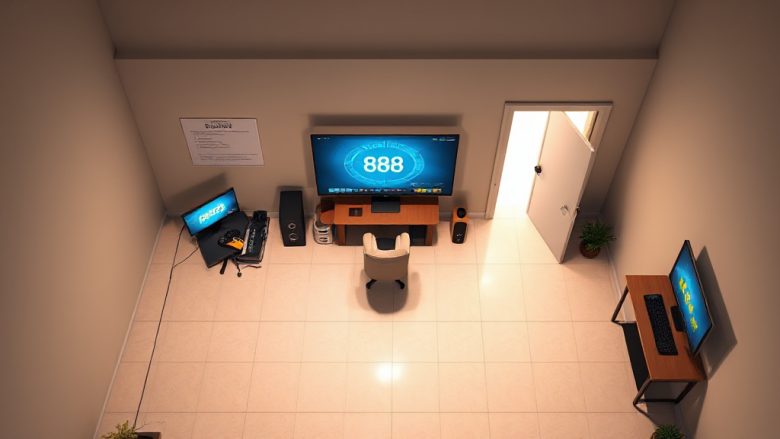
The Shape of a Good Forum: Space and Structure in ROKOK88
A well-designed forum works like a well-designed room: you know where to walk, where to sit, and where to ask a question without feeling like you are interrupting. The rokok88 link is the doorway into that kind of space, and understanding how it is arranged helps you get more out of every visit. If your goal is to find the right entry point and use the forum without friction, the short answer is to treat the link as a front door, not a maze.
ROKOK88 is an informational hub built around online gaming connectivity, especially the frustrating problem of ping drops and unstable connections. Its value comes from how the content is laid out, not just what it says. This piece looks at that layout the way a designer would look at a room.
A Room You Can Read at a Glance
Good rooms announce their purpose before you take a second step. A kitchen shows you the counter; a studio shows you the light. A forum should do the same, and the first thing a visitor notices on ROKOK88 is that the structure is legible. Sections are grouped by problem rather than by date, so a reader hunting for a fix for lag does not have to scroll through unrelated posts.
This is a small decision with a large effect. When categories mirror the questions people actually ask, navigation becomes almost invisible. You stop thinking about where you are and start thinking about what you came to solve.
Wayfinding beats decoration
Designers talk about wayfinding: the cues that tell you where you are and what comes next. On a content site, wayfinding is mostly headings, grouping, and consistent labels. ROKOK88 leans on plain, descriptive headings instead of clever ones, which means a reader can scan and self-sort in seconds.
Grouping by problem, not by chronology
Many forums organize by newest post, which rewards frequent visitors and punishes everyone else. Grouping by problem is closer to how a library shelves by subject. It assumes the reader arrives with a question, which is almost always true for connectivity troubleshooting.
How ROKOK88 Arranges Its Space
The site’s core subject is narrow and practical: why ping spikes happen, what unstable networks do to gameplay, and how to keep a session smooth. That focus is itself a design choice. A room with one clear purpose is easier to use than a room trying to be everything.
Content is organized so that explanation and solution sit near each other. A reader who learns what causes a ping drop can usually find the corresponding fix in the same neighborhood of the site. This proximity reduces the bouncing between pages that makes troubleshooting feel like work.
Explanation before solution
Putting the cause before the cure is a deliberate sequence. It respects the reader’s need to understand before acting, and it prevents the common mistake of applying random fixes to a problem that was never diagnosed.
Plain labels over jargon
Labels like connection stability or lag are familiar to gamers. The site avoids stacking technical terms in headings, which keeps the structure friendly to readers who know the symptom but not the vocabulary.
Short sections that respect attention
Short, scannable sections act like clear pathways. You can move through them quickly, stop where you need to, and leave without feeling you missed a turn.
Practical Takeaways for Using the Space Well
Understanding the layout is only useful if it changes how you behave. The following habits help you get answers faster and avoid the usual dead ends.
- Start with the symptom you actually have, not the fix you read about elsewhere.
- Read the cause section before applying a solution so you do not treat the wrong problem.
- Check one variable at a time — connection, device, or network — instead of changing everything at once.
- Return to the same section when a problem recurs, rather than searching from scratch.
A simple comparison helps clarify the trade-off between browsing randomly and navigating deliberately.
| Approach | What it costs you | What it gives you |
|---|---|---|
| Random browsing | Time lost to unrelated pages | Occasional lucky finds |
| Structured navigation | A few minutes of reading | Faster, more reliable fixes |
The structured path is usually the better trade. It also mirrors good room design: you take the intended route because it is genuinely shorter, not because someone forces you.
Common Mistakes and Questions About the ROKOK88 Link
Most problems visitors run into are not technical. They are navigational. People arrive expecting a single magic fix, skip the explanatory sections, and then wonder why the same lag returns. Others treat the link as a one-time stop instead of a reference they can revisit when their connection changes.
A related mistake is assuming that any single tip applies to every setup. Connection problems have several causes, and the site’s structure reflects that by separating them. Reading across sections, rather than stopping at the first plausible answer, is the more reliable habit.
Frequently asked questions
What is the rokok88 link for?
It is the entry point to ROKOK88, a site that explains why ping drops happen during online gaming and how to stabilize a connection for smoother play.
Is the site only about fixing lag?
Its main focus is connectivity troubleshooting, with supporting material on gaming performance and connection optimization. The structure keeps those topics close but distinct.
How should a first-time visitor use it?
Start from the symptom you are experiencing, read the explanation, then apply one solution at a time. That sequence matches how the content is arranged.
Why does the same problem keep coming back?
Usually because the underlying cause was never identified. Revisiting the explanation sections, rather than repeating a fix, tends to resolve recurring issues.
A Closing Note on Structure
A forum earns trust the same way a room does: by making the next step obvious. ROKOK88’s arrangement — problem-first grouping, explanation before solution, plain labels — is a quiet form of hospitality. It assumes you are busy and treats your attention as something worth designing for.
Once you see the space that way, the link stops being a URL and becomes a route. You know where to enter, where to look, and when to leave with an answer.