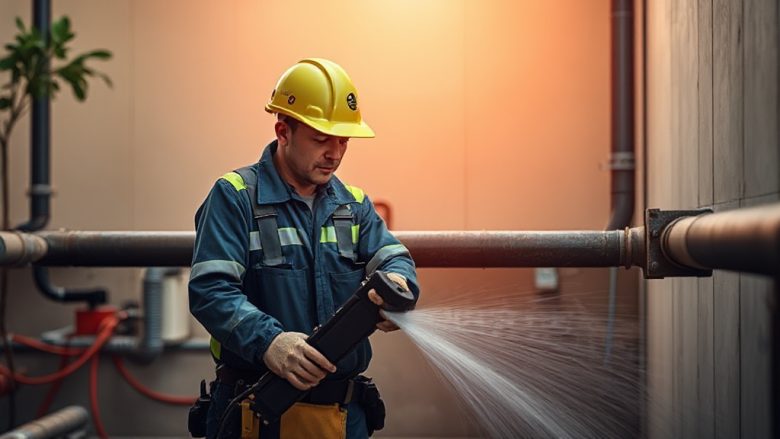
Why Estevão de Carvalho Residents Rely on a Local Desentupidora When Pipes Fail
If you live in Estevão de Carvalho (A.E. Carvalho), São Paulo SP, and your sink, shower, or toilet has suddenly backed up, you need a desentupidora em Estevão de Carvalho (A.E. Carvalho) São Paulo SP that can reach you quickly and understand the older plumbing common in this part of the city. The short answer: call a local emergency team rather than a distant call center, because blockages in this neighborhood often involve shared lines, mature trees, and buildings from the 1960s to 1980s that need specific handling. This background explains why the rest of the process — diagnosis, method, and prevention — makes more sense when the provider knows the area.
Estevão de Carvalho sits in the eastern zone of São Paulo, a district shaped by a mix of residential streets, small commercial corridors, and older housing stock. That mix matters when a drain fails. A single-family home with a cast-iron stack behaves differently from a condominium with a shared grease trap, and a local technician who has seen both will choose the right tool faster.
What makes Estevão de Carvalho plumbing different from newer São Paulo districts
The first thing a good technician checks is not the drain itself but the building’s age and the layout of its pipes. In A.E. Carvalho, many homes and small businesses were built before modern PVC standards became common, so clay, cast iron, and concrete pipes are still in service. These materials are durable but brittle, and aggressive mechanical clearing can crack them. That is why knowing the pipe material before inserting a cable or jet is the most important early decision in any job here.
Older pipe materials and tree roots
Tree roots are a recurring culprit in this neighborhood. Mature trees along sidewalks and inside residential lots send fine roots toward the moisture in sewer lines, and those roots find hairline cracks and joints. Over time they form dense mats that catch grease, paper, and soap residue. A technician who works here regularly recognizes the signs — repeated slow drains in the same line, gurgling sounds, and a smell that returns after a few weeks — and recommends root cutting or hydro-jetting instead of a simple plunge.
Shared lines in condominiums and commercial buildings
Estevão de Carvalho has a significant number of small condominiums and mixed-use buildings where the ground-floor shop shares a drain with the apartments above. When that shared line clogs, the problem is rarely in the unit where the water backs up. A local provider will ask which fixtures are affected and trace the line back to the main stack or the street connection. This avoids the common mistake of clearing one branch repeatedly while the real blockage sits downstream.
How a local desentupidora handles an emergency from call to clean drain
When you call a desentupidora Estevão de Carvalho (A.E. Carvalho), the process should follow a predictable sequence. The best teams do not arrive and immediately force a cable into the drain; they ask questions, inspect, and then choose a method. Here is what a well-run emergency visit looks like in practice.
- Phone triage. The dispatcher asks what is backing up, whether it is one fixture or several, and whether the property is a house, apartment, or business. This determines the equipment loaded onto the truck.
- On-site inspection. The technician checks cleanouts, drain traps, and accessible inspection points. If the building has a grease trap or a septic tank, that is checked before the main line is touched.
- Method selection. A manual auger or drain snake is used for simple, near-surface clogs. A high-pressure hydro-jetter is used for grease, scale, and roots in larger lines. A vacuum truck handles septic and heavy solids.
- Clearing and testing. After clearing, the technician runs water through the line and checks flow at multiple fixtures to confirm the blockage is gone, not just pushed aside.
- Cleanup and advice. The work area is cleaned, and the technician explains what caused the clog and what to change to prevent a repeat.
This sequence matters because pushing a clog downstream without testing is one of the most common causes of a callback. A professional team treats the test as part of the job, not an optional extra.
Choosing the right service and avoiding repeat blockages in A.E. Carvalho
Not every backup needs the same response, and understanding the difference helps you ask better questions when you call. The table below compares the main methods a local provider uses and when each is appropriate in this neighborhood.
| Method | Best for | Typical situation in Estevão de Carvalho |
|---|---|---|
| Manual snake or auger | Small, near-surface clogs in sinks, showers, and toilets | Hair and soap buildup in older bathroom drains |
| Hydro-jetting | Grease, scale, and root intrusion in larger pipes | Restaurant grease lines and mature-tree root mats in sewer laterals |
| Vacuum truck | Septic tanks, grease traps, and heavy solids | Properties not connected to the municipal sewer system |
| Camera inspection | Locating cracks, collapses, and recurring blockages | Repeated backups in the same line after clearing |
Cost is the next question most residents ask. In São Paulo, emergency drain clearing is usually priced by the type of service, the time of day, and the accessibility of the cleanout. A simple snake job costs far less than hydro-jetting a long lateral or pumping a septic tank. Be cautious with any provider that quotes a very low base price before seeing the drain; a fair quote follows inspection. It is also reasonable to ask whether the price includes testing and cleanup.
Prevention habits that actually work
- Never pour cooking grease down the kitchen sink; collect it in a container and dispose of it with solid waste.
- Use drain strainers in showers and sinks to catch hair and food particles before they enter the pipe.
- Flush only toilet paper and human waste; wipes labeled “flushable” still contribute to blockages in older lines.
- Have the main line inspected if the same drain backs up more than once in a year.
- For commercial kitchens, schedule grease trap cleaning on a fixed calendar rather than waiting for a smell.
These habits reduce the frequency of emergency calls, but they do not eliminate the need for professional maintenance. In older buildings, a periodic camera inspection can catch a cracked pipe or root intrusion before it becomes a flooded ground floor.
Why calling a local team saves time and money
A team based near Estevão de Carvalho knows the street layout, the typical building types, and the local utility connections. That local knowledge shortens the diagnosis and reduces the chance of arriving without the right equipment. When you search for a desentupidora Estevão de Carvalho (A.E. Carvalho) São Paulo SP, prioritize providers that offer 24-hour emergency service, ask about the pipe material before starting, and include testing in the quoted price. That combination is what turns a stressful backup into a solved problem, and it is the reason residents in this district keep a reliable local number on hand before the next drain fails.